The Tension Between Proponents and Skeptics of the AI Bubble Risk
The scale of AI computing power has become a symbol of national strength. From chip manufacturing and substrates to cooling systems and server racks, the core of the AI semiconductor ecosystem has upgraded to a matter of national security. For companies in this field, navigating the intersection of geopolitics and economics has become a mandatory discipline.
While the risk of an "AI bubble" has not yet fully materialized, the arguments between opposing market outlooks remain tense. Whether the industry's future development will enter a "Copenhagen Interpretation" (Note 1) mode of thinking—where multiple possibilities exist simultaneously until a path is defined—depends on the navigation of a new generation of entrepreneurs.
Interpreting Quantum Thinking to Foresee the Future Industrial Ecosystem
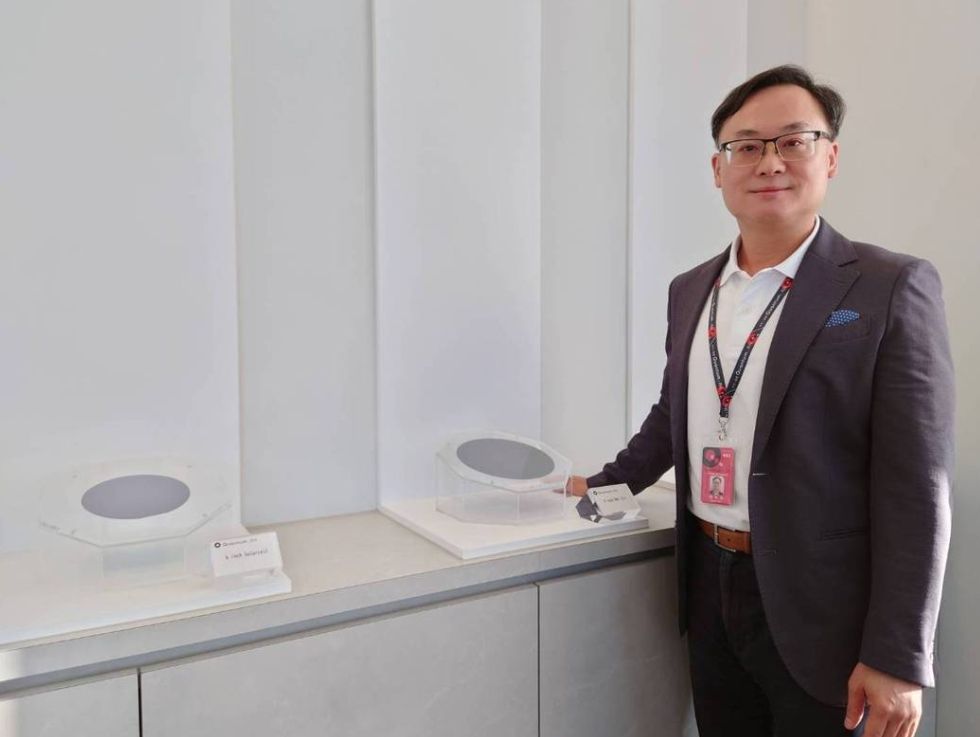
Dr. Sean Lin, CEO of Quantum NIL, observes that as quantum technology matures, it is expected to gradually displace existing high-performance computing (HPC) markets dominated by silicon processes. The "giants" of the AI semiconductor industry are moving toward a "winner-takes-all" oligopoly, increasing pressure on startups and SMEs. Furthermore, whether drastic shifts in the international landscape will create a "new normal" for the continuous development of AI semiconductors has drawn intense global attention.
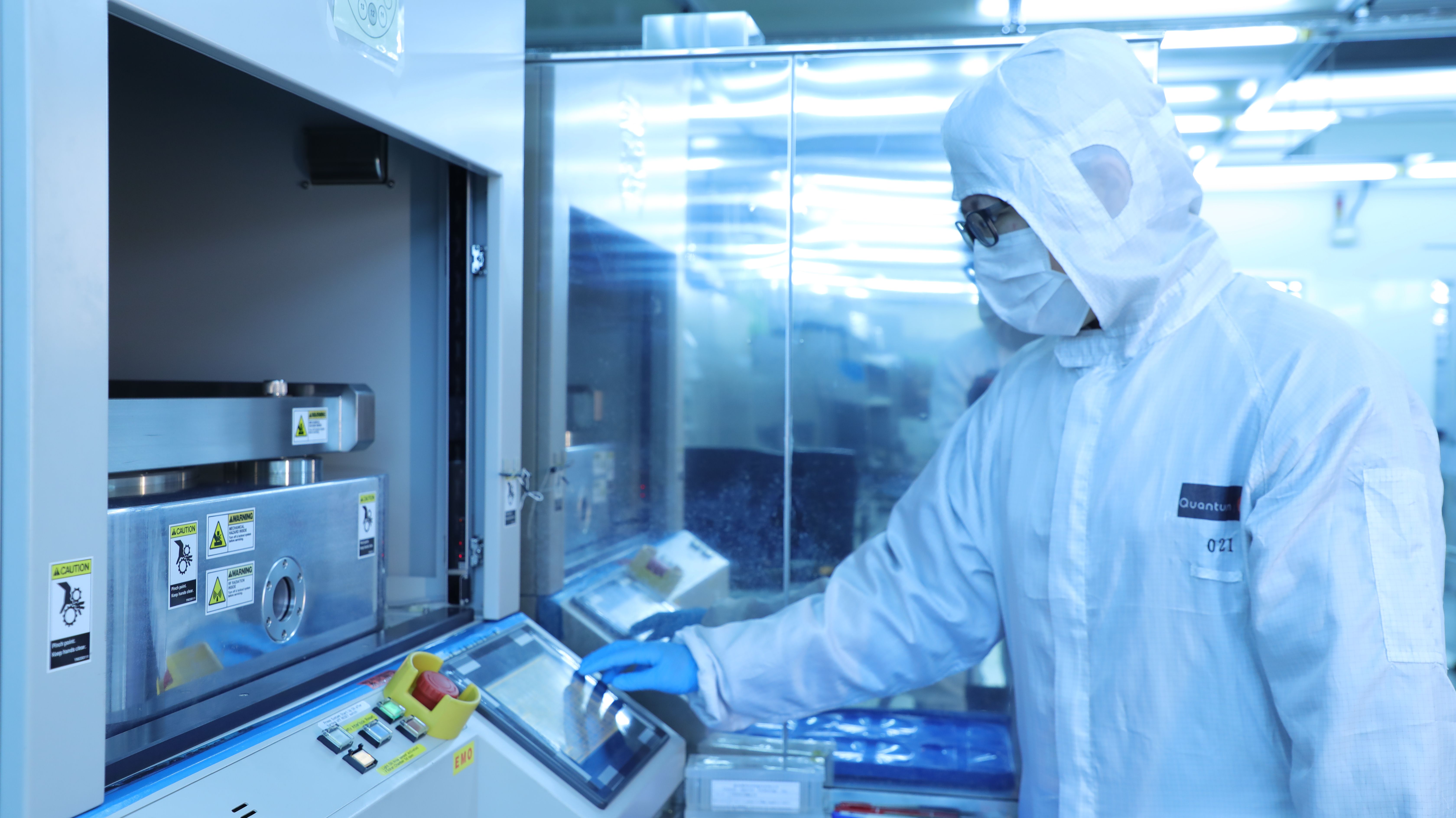
Focusing on the application of Nanoimprint Lithography (NIL), Quantum NIL is developing its own core technologies while integrating several proprietary techniques to actively expand into the foundry market for third-generation semiconductors and metasurfaces. Dr. Lin points out that Quantum NIL utilizes disruptive innovation to invest in upstream quantum R&D and is building its own Process Design Kit (PDK). "By interpreting quantum thinking, we foresee the future ecosystem of the quantum industry," Dr. Lin stated, emphasizing the company's commitment to providing comprehensive process solutions for clients.
Closely Observing the New Context of Quantum Commercialization
With a long-standing background in the compound semiconductor industry, Dr. Lin maintains a keen eye on global industrial shifts and international relations. In today’s rapidly changing technological landscape, he advocates for a "multimodal perspective" in decision-making to stay ahead of the curve. He also reminds us that while Taiwan's AI semiconductor industry currently holds an overwhelming advantage, it must remain cautious of potential underlying challenges.
Dr. Lin notes that while Taiwan leads in advanced semiconductor manufacturing, the core hardware and software intellectual property are still dominated by U.S. enterprises. The industry's growth is tightly linked to the international supply chain. Whether the commercialization of quantum technology will follow this same trajectory or find an alternative path remains a critical point for observation.
Room for Growth in Forward-Looking Quantum Development
Dr. Lin believes there is still significant room to enhance Taiwan’s research capabilities and development environment for quantum technology. However, he finds it encouraging that Professor Ray-Nien Kuan (Chang Ching-ray), a leading figure in Taiwan’s quantum science and a board member of Foxconn, was selected for the UNESCO "Quantum 100" last year—a major boost for Taiwan’s quantum roadmap.
Looking ahead, Dr. Lin plans to deepen Quantum NIL's strategic links with the United States. Following his participation in the SelectUSA series last year as a representative of Taiwan's elite enterprises, he expects to return to the U.S. this coming March. His itinerary includes visits to Boston to meet with professors from MIT and Professor George Whitesides of Harvard University to continue driving forward-looking developments in quantum technology and biotechnology.
Innovating Manufacturing through Digital Twin and Quantum Integration
As the United States moves to revitalize its manufacturing sector, Dr. Lin views the Digital Twin platform as the core of next-generation high-efficiency manufacturing. With the internalization of AI in manufacturing, he believes the U.S. has a chance to "leapfrog on the curve." For Taiwan’s part, Quantum NIL intends to combine the nation's vast accumulated big data assets with quantum technology to build a "Taiwanese-version Digital Twin" and a flexible foundry platform, pioneering new manufacturing trends.
Dr. Lin emphasizes that for startups to succeed today, they must possess the ability for multimodal thinking and a deep interpretation of international political and economic trends. From "Quantum Politics" to the "Copenhagen Interpretation," his decision-making logic reflects a visionary’s grasp of market opportunities and a profound understanding of the evolving global landscape.
Note 1: The Copenhagen Interpretation
The standard mainstream explanation of quantum mechanics, proposed by Werner Heisenberg in the 1920s. Its core concept is that a quantum system exists in a probabilistic superposition of states until it is observed. The act of measurement causes the "collapse of the wave function," randomly determining the system into a single state. It emphasizes the probabilistic nature of the microscopic world and the influence of the observer on the system. Although famously challenged by Einstein ("God does not play dice") and Schrödinger (the "Schrödinger's Cat" paradox), it remains a cornerstone of quantum mechanics due to its accurate experimental predictions.
Other News